
Creatine for Women: What the 2026 Research Shows
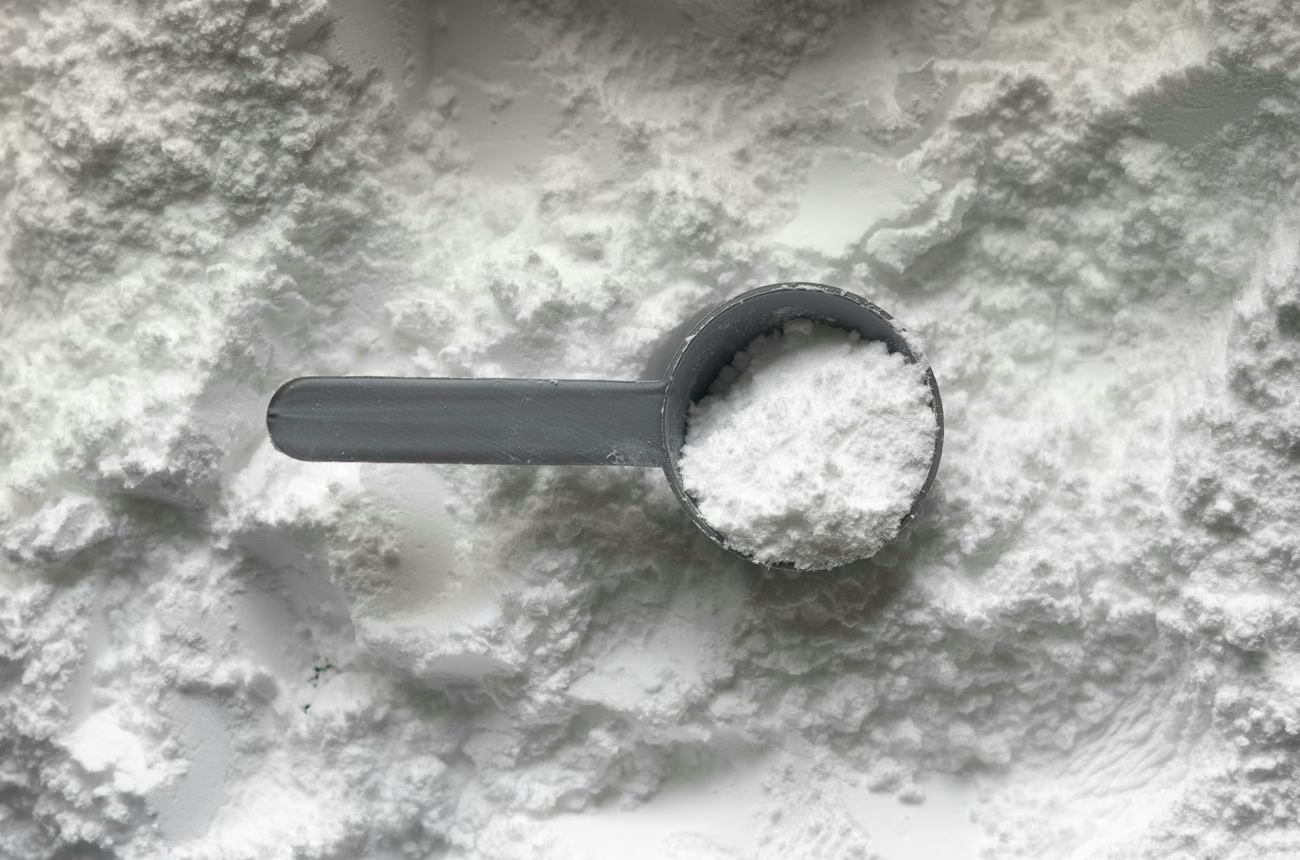
For years, creatine was tested almost entirely in young men. A wave of 2026 research has changed that, and creatine for women is now one of the most studied questions in sports nutrition. The early answer is that women may have the most to gain, partly because they start with far less of it.
Creatine is a compound your body makes from amino acids and stores mostly in your muscles, where it fuels short, hard efforts like a heavy set or a sprint. You get about 1 to 2 grams a day from meat and fish, and a supplement tops up the rest. UCLA Health calls it one of the most researched supplements available, with interest spreading from the gym to women's health and healthy aging.
Why Creatine for Women Works Differently
Women carry an estimated 70% to 80% lower creatine stores than men, according to a peer-reviewed review of creatine across the female lifespan. Your muscles sit around 60% to 80% full at baseline, and a daily dose can raise those stores by 20% to 40%. Lower starting stores mean there's more empty space to fill, which may be why the response in women can be easy to notice.
What that means in the gym
Fuller creatine stores help your muscles recharge between bursts of effort. In practice, that can look like one or two more quality reps on a hard set, or a bit more power on a jump or a sprint. The effect is real but modest. Think of it as a small, steady edge, not a transformation.
Why it matters more after 40
Estrogen helps protect muscle and bone. As it falls through perimenopause and menopause, women lose both faster. That's the window where the new research is most interesting, because creatine and strength training appear to act on muscle and bone at the same time. For creatine for women over 50, those two findings are the main reason to consider it.
What the Research Shows for Muscle and Strength
Two findings anchor the case for creatine for women: more strength when you train, and slower bone loss after menopause. Muscle comes first. Creatine is not a shortcut, and the data is clear about that. Pooled trials show the same pattern: combine creatine with resistance work and lean mass goes up, but take it without training and it does little on its own. The supplement amplifies your effort. It doesn't replace it.
The picture for women is honest, not hyped. A systematic review of older women found creatine improved muscle strength, with the clearest gains when resistance training ran for at least 24 weeks. Some studies still show men add more muscle mass than women on the same program, so the strength benefit looks more dependable for women than a large jump in size. Either way, whether creatine helps build muscle in women comes with the same condition every time: you have to train.
The scale can't tell you which way this is going, because it folds muscle, fat, water, and bone into one number. A DEXA scan gives you visibility into your lean mass and body fat separately, so you can see whether creatine and training are shifting your body composition. The best way to measure muscle and bone density at the same time is a scan like this, not a guess from the bathroom mirror. If you're new to the numbers, our guide on reading your DEXA results walks through what each one means.
Creatine and Bone Density After Menopause
The bone findings
Bone mineral density is a measure of how strong and dense your bones are, and it tends to drop after menopause, which raises the risk of fractures. In one trial, postmenopausal women who paired resistance training with creatine lost about 1.2% of bone density at the femoral neck, the narrow part of the thighbone near the hip, compared with closer to 4% in the placebo group. Creatine didn't build new bone, but with training it slowed the loss. The link between creatine and bone density is still being studied, so treat it as promising, not proven.
A DEXA scan tracks changes in your bone density over time, which makes it a practical way to see whether your routine is holding the line on bone, not just muscle.
Beyond muscle: the brain angle
The newest research looks past the body. A 2026 systematic review in Nutrition Reviews examined creatine and thinking skills in older adults, part of what scientists call the muscle-brain connection. UCLA's dietitians point to similar early signals for memory and focus, especially under stress or short sleep. The cognitive findings are early and far from settled, so this is one to watch. For now, the muscle and bone evidence is the stronger case, and those are the creatine benefits with the most data behind them.
How Much Creatine to Take
The routine that keeps showing up in studies is simple. Most research uses 3 to 5 grams of creatine monohydrate a day, taken every day, including rest days. Monohydrate is the cheapest and most studied form, so skip the pricey blends. UCLA's dietitians suggest looking for a third-party seal like NSF Certified for Sport to check for purity.
You don't have to load. Loading means taking about 20 grams a day, split into four doses, for 5 to 7 days to fill your stores fast. A steady 3 to 5 grams gets you to the same place in three to four weeks, usually with less bloating. Creatine is well tolerated in healthy people. If you take medication or have any kidney concerns, talk with your doctor before starting, and share any body composition changes with your doctor or trainer.
Creatine works best as one piece of a plan: strength training a few times a week, enough protein, steady sleep, and a way to measure what's changing. Here in Charleston, people often book a scan at the start of a training block and another a few months in to watch their lean mass and bone density move. That before-and-after comparison, not the number on the scale, is how you tell whether creatine for women is doing its job for you.
Frequently asked questions
How much creatine should a woman take per day?
Most studies use 3 to 5 grams of creatine monohydrate per day, taken every day, including rest days. You don't need to time it around workouts, and you don't need a loading phase. Being consistent matters more than the exact timing.
Does creatine make women gain weight?
Creatine can pull a little water into your muscles, so the scale may rise a pound or two in the first few weeks. That's water and muscle, not fat. A DEXA scan can show you the difference by separating lean mass from body fat.
Is creatine safe for women?
For healthy women, long-term studies have not found harm to the kidneys at standard doses, and creatine is not a steroid. Some people get mild bloating or stomach upset, which usually fades. If you take medication or have a health condition, check with your doctor before adding any supplement.