
What is Fibermaxxing? and should you be doing it?
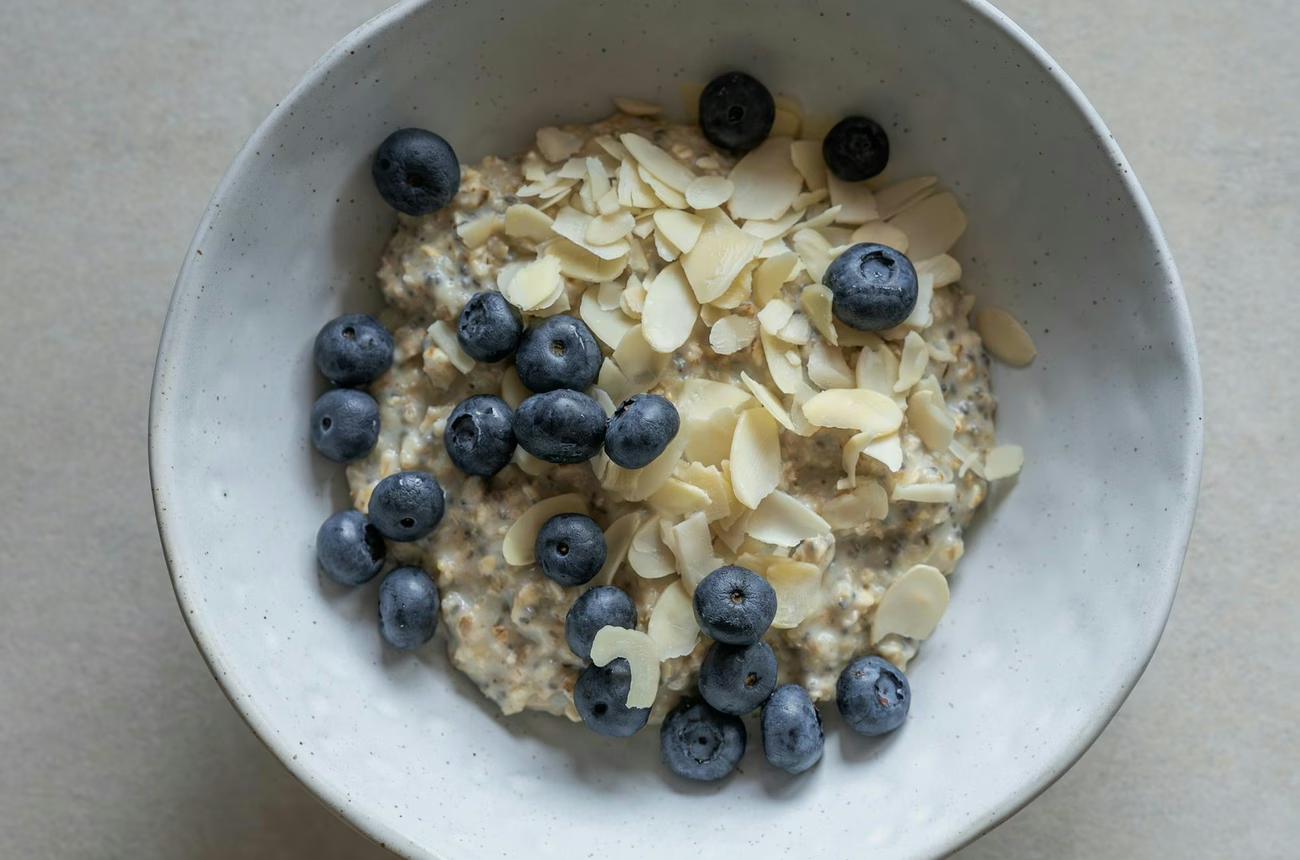
Fiber searches jumped about 9,500% over the past year, and a TikTok habit is the reason. Fibermaxxing is the practice of deliberately pushing your daily fiber well above the usual target, sometimes to 40 or 50 grams, mostly through whole foods. It's the loudest nutrition trend of 2026. Unlike most viral diets, this one has decades of research behind it.
There's a real gap underneath the hype. Only about 5% of U.S. adults hit the recommended fiber intake, and the average person eats around 15 grams a day, according to the American Society for Nutrition. The target sits much higher. For most people, eating more fiber isn't a fad. It's catching up.
What Fibermaxxing Actually Is
Fibermaxxing means raising the fiber in your diet, day by day, until you're well above the minimum. Most people do it with food: beans, lentils, oats, chia seeds, berries, and vegetables. Some add a supplement like psyllium husk to close the gap.
The standard recommendation gives you a floor to aim for. Mayo Clinic puts it at 25 grams a day for women and 38 grams for men under 50, with slightly less after age 50. These routines often push to 40 grams or more. That's above the floor, and for some people it's more than their gut is ready for.
Fiber isn't one thing. It comes in two forms, and they do different jobs.
Soluble fiber
Soluble fiber dissolves in water and forms a gel in your gut. It slows digestion, which blunts blood sugar spikes and helps lower LDL cholesterol. You get it from oats, beans, apples, citrus, and psyllium.
Insoluble fiber
Insoluble fiber doesn't dissolve. It adds bulk to stool and moves waste through your system, which keeps you regular. Whole grains, nuts, and the skins of fruits and vegetables are the main sources.
What the Research on Fiber Actually Shows
Most of fiber's payoff happens in your large intestine. The fiber you can't digest becomes food for gut bacteria. When those bacteria ferment it, they produce short-chain fatty acids: compounds like butyrate, propionate, and acetate. Different fibers feed different microbes, which is why variety matters as much as the total grams on your plate.
Gut health and short-chain fatty acids
Soluble fiber feeds the bacteria that make short-chain fatty acids. Those compounds lower inflammation in the gut and feed the cells lining your colon. Stanford researchers reported that short-chain fatty acids can change how certain genes behave, which is one reason fiber keeps showing up in colon cancer prevention research.
Visceral fat and metabolic health
Higher fiber intake is tied to less visceral fat, the fat stored around your organs. In one study, the soluble fiber inulin reduced visceral fat mass and improved glucose tolerance partly by shifting gut metabolites, per research published in the National Library of Medicine. A separate review in Frontiers in Nutrition linked higher fiber diets to lower rates of heart disease, type 2 diabetes, and obesity.
Appetite and weight
Fiber fills you up without many calories. Soluble fiber slows how fast your stomach empties, so you feel full longer and tend to eat less at the next meal. That's why a high-fiber diet shows up so often in weight-management research, separate from any drug. One trial found that a fiber-focused group held its weight about as well as a medication group, with fewer digestive complaints and a more diverse gut microbiome.
How to Fibermaxx Without Wrecking Your Gut
The most common mistake is jumping from 15 grams to 45 overnight. That's the fast track to bloating, gas, and cramps. Dietitians at Houston Methodist suggest adding about 5 grams of fiber per week so your gut bacteria can adjust.
Add it slowly
Raise your fiber by roughly 5 grams a week, not all at once. A single cup of black beans has about 15 grams, so small swaps add up fast. Give your system a couple of weeks at each level before climbing higher.
Drink more water
Fiber pulls water into your gut to do its job. Without enough fluid, more fiber can cause constipation instead of relieving it. Increase your water as you increase your fiber.
Favor food over supplements
Whole foods give you fiber plus vitamins, minerals, and plant compounds a powder can't match. Use a supplement like psyllium to fill a gap, not to replace meals. Eating 30 different plants across a week is a simple way to get a range of fiber types.
Know your ceiling
More isn't always better. Going past 40 to 50 grams a day can cause gas, cramping, and reduced absorption of minerals like iron and calcium. People with IBS or Crohn's disease may react to high-fiber loads and should talk with a doctor first.
Where Fiber Meets Body Composition
Fiber's biggest wins are the ones you can't see on a scale. More fiber can shift your visceral fat and body fat percentage even when total weight barely moves. The mirror and the bathroom scale miss that change.
A DEXA scan gives you visibility into what's actually shifting. It tracks changes in your body fat percentage, lean mass, and visceral fat by region, so you can see whether a higher-fiber diet is moving the numbers that matter. If you're fibermaxxing to improve metabolic health, a scan every 4 to 6 months at our Charleston studio shows whether the change is landing where you want it. Pricing is posted upfront, with no insurance approvals and no surprise bills. Share your results with your doctor or dietitian so the data informs what you eat next.
The Practical Takeaway
For most adults, the trend points in the right direction, just not at full speed. Build toward 25 to 38 grams a day from real food, add it gradually, and drink enough water to match. If you want to see what the change does below the surface, track your body fat and visceral fat over a few months instead of watching the scale.
Frequently asked questions
Is fibermaxxing good for you?
For most people, yes, with a caveat. Since only about 5% of adults get enough fiber, eating more moves you toward the recommended range. The catch is speed. Ramping up too fast causes bloating and cramps. Build up gradually and most of the benefits, like better digestion, steadier blood sugar, and improved gut health, show up without the discomfort.
How much fiber should you eat per day?
Mayo Clinic recommends 25 grams a day for women and 38 grams for men under 50, dropping to 21 and 30 grams after age 50. Most of these routines aim for the high end of that range or slightly above. Going past 40 to 50 grams a day adds little extra benefit and raises the odds of gas and cramping.
How do you increase fiber without bloating?
Add about 5 grams of fiber per week instead of overhauling your diet overnight, and drink more water as you go. Spread fiber across your meals rather than loading it into one sitting. This gives your gut bacteria time to adapt, which is what reduces the gas and bloating that come with sudden jumps.